Fluid control valves play a vital role in regulating the flow, pressure, and direction of various fluids in industrial, commercial, and residential applications. Let’s take a closer look at two types of fluid and air control valves, how they work, and how they are powered. Understanding these valves will help you make more informed decisions when it comes to selecting the right valve for your specific needs.

Ball Valves: Designed for Reliable Performance
Ball valves are essential components in the fluid-control industry, offering efficient air and fluid flow and shut-off control. These valves are constructed with a spherical disc with a hole or bore through their center. This ball can be rotated to either allow or block the flow of air or fluid.
The ball valve design allows for excellent sealing properties, minimizing leakage and ensuring reliable operation. These valves are often found in various industries, including oil and gas, water treatment, chemical processing, HVAC systems, and manufacturing applications.
Ball valves are valued for their reliability, versatility, and ability to handle a wide range of fluids and operating conditions.
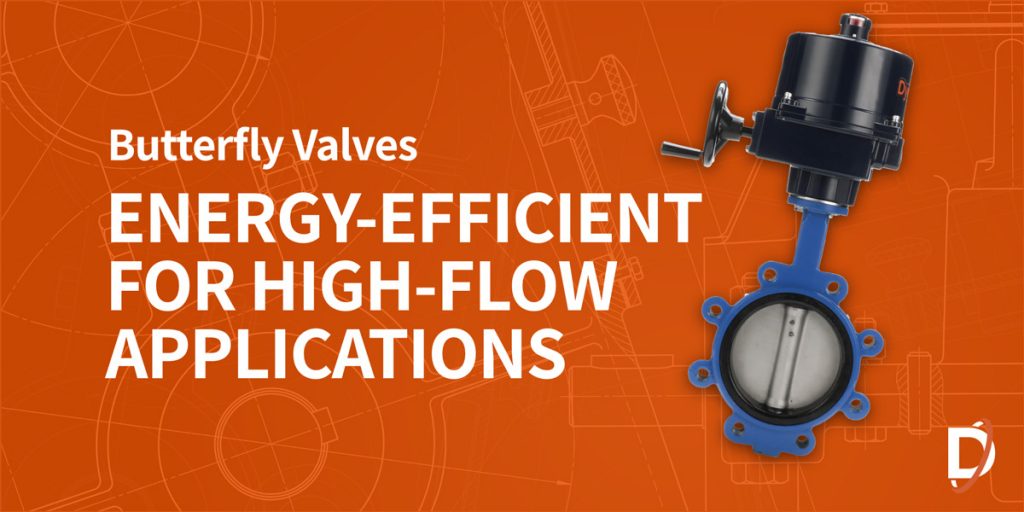
Butterfly Valves: Energy-Efficient for High-Flow Applications
Butterfly valves also provide efficient air and fluid flow and shut-off control, but in a different manner than ball valves. Butterfly valves consist of a circular disc or plate with a pivot shaft in the center and when this disc is rotated, it either allows or blocks the flow of air or fluid.
The streamlined design of butterfly valves helps to make them energy-efficient and suitable for high-flow applications. These valves provide quick and reliable shut-off, and their compact size makes them ideal for space-constrained installations. Butterfly valves are commonly used in industries such as water treatment, HVAC systems, chemical processing, and power generation.
Butterfly valves are recognized for their simplicity, versatility, and cost-effectiveness in a wide range of fluid-control applications.
Manual and Automated Power Options
Both ball valves and butterfly valves are versatile and can be manually controlled or powered with a valve actuator, depending on application requirements. Manual valves are operated by a lever, handle, or handwheel, providing a simple and cost-effective solution. These valves are commonly used in low-pressure applications or situations where frequent operation is not required.
Automated valves utilize pneumatic or electric actuators to enable remote control and enhance functionality. Actuators can be programmed to open or close the valve based on specific conditions or signals, making them ideal for complex systems or processes that demand precision and automation.
Which Valve is Right for You?
If you have questions about ball valves or butterfly valves and would like to know how they can improve the productivity of your operation, we invite you to explore our website or feel free to contact us at 800-545-3636. DynaQuip works where you work!